
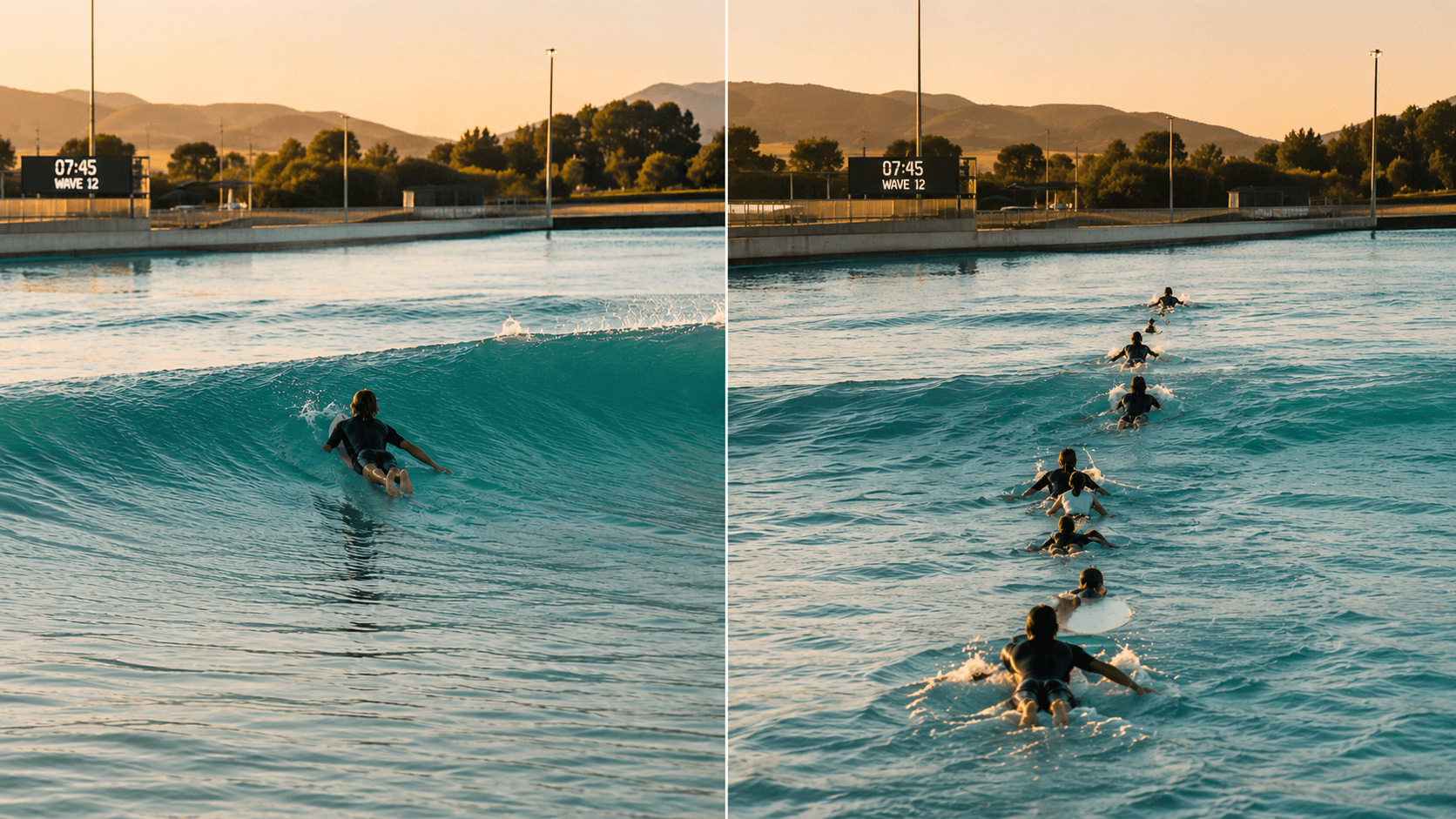
Low-count sessions get treated like the obvious answer on this blog - more waves, less stress, better progression. All true. But nobody surfing an empty wave pool at 10am on a Tuesday is pretending it feels the same as a packed Saturday session with your friends in the lineup. If you’re weighing whether to chase the quiet slot or the popular one, here’s the honest version: what you actually gain, what you actually give up, and which kind of surfer each one is really for.
The Case For: The Wave Math Is Real
Start with the number that matters most: waves per hour. Drop a session from 16 surfers down to 5 or 6, and the math swings hard in your favor - fewer people in rotation means the wave comes back to you in a fraction of the time. We broke down exactly how that adds up in Wave Math: Why Low-Count Sessions Beat Full Ones, and the short version holds up: a full session can leave you with 7 rushed waves and a stiff neck, while a low-count one at the same park can hand you 20 or more.
That’s not a marginal difference. It’s the difference between an hour that felt like a warm-up and one that felt like an actual session.
The Case For: Ease of Mind
The other pro is less about numbers and more about headspace. In a packed lane, every mistake feels public - you blow a takeoff, and you’re already thinking about the surfer stacking up behind you instead of resetting for the next wave. We’ve written before about that exact feeling in The Paddle of Shame, and it’s the real reason low-count sessions feel so different beyond the wave count. With fewer people in rotation, you get room to fail, laugh it off, and try again without an audience. That matters more than most surfers admit, especially if you’re actively working on something specific in your surfing rather than just logging waves.
The Honest Cons
Here’s where the cheerleading usually stops, and where it shouldn’t.
Less energy in the water. A packed session at a park like The Wave Bristol has a buzz to it - people hooting for each other, a rotation moving fast enough that it feels alive. A near-empty lane can feel flat by comparison, especially on a grey weekday morning with four other surfers and nobody talking.
Fewer people to watch and learn from. Some of the fastest progression happens by watching someone slightly better than you take a wave and stealing their line choice or timing. Strip the session down to a handful of surfers and that resource mostly disappears.
The timing is usually inconvenient. Low-count sessions don’t often land at 6pm on a Friday. They show up midweek, mid-morning, or in the awkward slot nobody wanted - which is exactly why they’re quiet. If your schedule is rigid, “just book the quiet one” isn’t always realistic advice.
Sometimes it’s quiet for a reason. Occasionally a low-count session sits next to a maintenance window, a colder water cycle, or a session type that’s genuinely less popular for a reason worth knowing before you book. It’s not always just luck of the draw.
None of that erases the pros. It just means “low-count is always better” is a little too clean.
Who Low-Count Actually Suits
If you’re working on a specific technical fix - a later takeoff, a cleaner bottom turn, timing your pop-up - a quiet session is close to ideal. Fewer distractions, more reps, more room to repeat the same adjustment until it sticks. Same story if you’re newer to wave pools and still building comfort; if that’s you, our first wave pool session guide is worth a read before you book anything.
But if you’re chasing atmosphere - surfing with a group, feeding off other people’s energy, treating the session as much as a social hour as a training one - a fuller, livelier slot can genuinely be the better call, even with fewer waves per person.
Finding One Without Guessing
If you’ve decided low-count is what you want, the annoying part is that these sessions rarely announce themselves. They show up through late cancellations, quiet count drops, and awkward weekday windows - not the slots everyone’s already fighting over. Our practical guide to finding an empty surf session covers the patterns in detail.
Or skip the manual hunting altogether. Surf Session Finder watches booking pages for you and pings you the moment a low-count or newly opened session appears at parks like The Wave Bristol, URBNSURF Melbourne, or Atlantic Park Surf Virginia - so you’re not the one refreshing a schedule page at midnight hoping for a gap. Set your preferences once at surfsessionfinder.com, and let the alert do the deciding for you.
Published by Surf Session Finder - Free alerts to help surfers find low-count surf park sessions.