
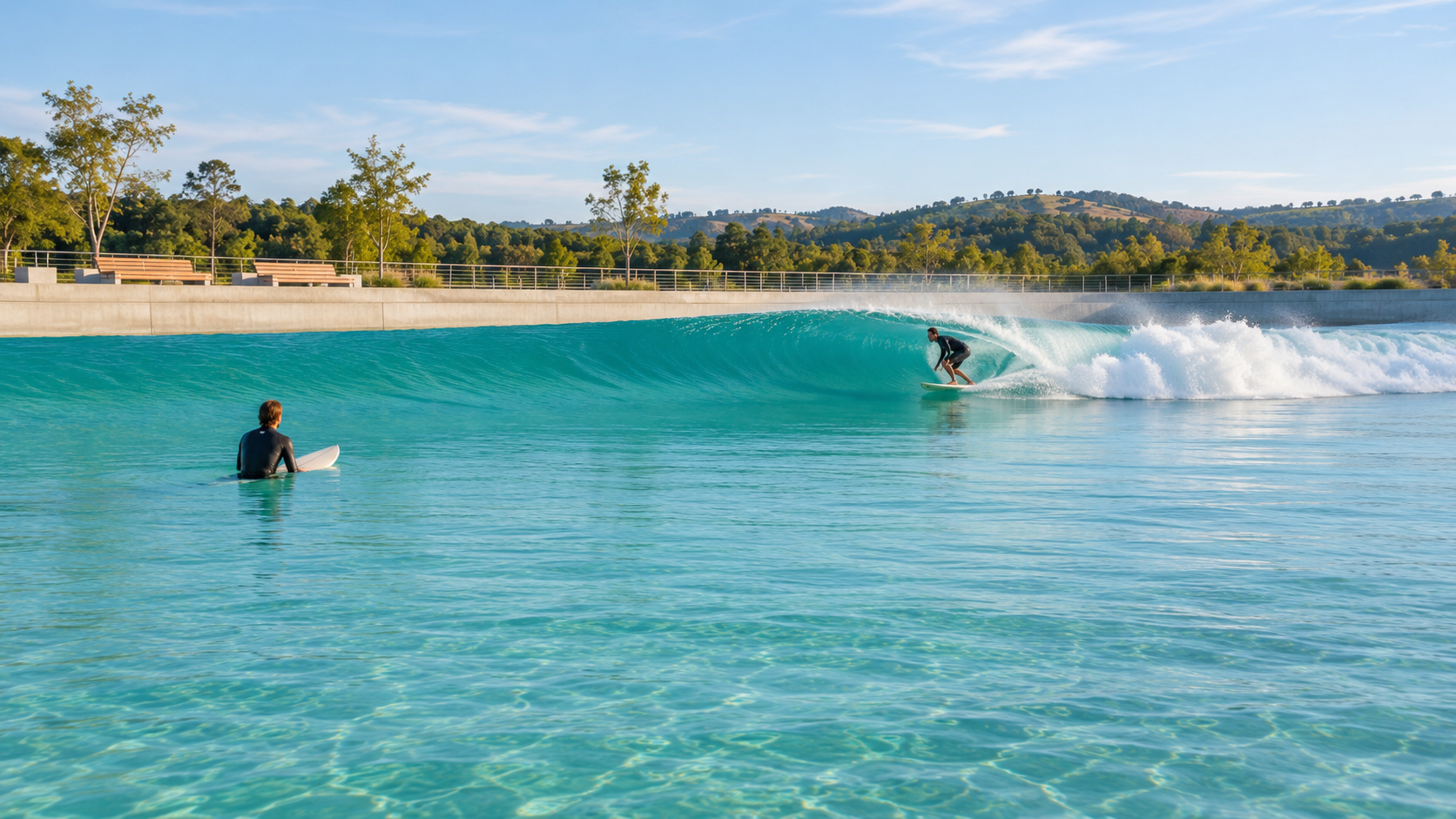
Room to ride on a quiet wave pool morning. AI-generated illustration.
Saturday at 9am: sold out. Tuesday at 11am: half the places still open. Same pool, same waves. If you’ve ever looked at a wave pool schedule, you’ve seen it.
Empty wave pool sessions are built into how surf parks work. Once you understand why they happen, they get a lot easier to catch.
Great Waves Don’t Fill Sessions
In November 2026, Surf Lakes put its original wave pool near Yeppoon, Queensland, up for sale, reportedly for around AUD $4 million. The prototype was completed in 2018 and drew rave reviews from surfing legends, including Mark Occhilupo. But it ran as an invitation-only research site, never opened to the public, and was later decommissioned.
Surf Lakes proved the waves. Because it never sold public sessions, it never had to deal with the other half of the business: filling every session on the schedule, week after week. Every operating surf park deals with that every day, and that’s where empty sessions come from.
Why Surf Parks Can’t Fill Every Session
A wave pool runs on a fixed schedule. Sessions run back to back through the day, whether 3 surfers booked or 20. Demand doesn’t spread out to match.
Weekday evenings, weekend mornings and school holidays fill fast, because that’s when most people can surf. Weekday mid-mornings and early afternoons often don’t. Parks use pricing and session types to even things out, but they can’t create demand on a Tuesday at 11am.
An unsold place is also gone for good. A park can’t keep it in stock and sell it next week. As a rough illustration (not any park’s real figures): a 20-place session at $100 a place that runs with 12 surfers leaves $800 unsold. The park would love to sell those places. The 12 surfers in the water are happy it didn’t.
Where the Empty Spots Come From
Most open places at a surf park come from three sources:
- Off-peak times. Midweek mid-mornings and early afternoons are the usual quiet slots.
- Cancellations. People cancel when work runs late or plans change, so a sold-out session can get places back at any time, including the day before.
- Less popular session types. Some levels or wave settings draw smaller crowds than others on the same day.
We covered how cancellations turn into openings in Never Miss a Surf Park Session Again.
Why an Empty Session Is Worth Chasing
Fewer surfers in a session usually means more waves each, less waiting, and less pressure on every takeoff. We ran the numbers in Wave Math: Why Low-Count Sessions Beat Full Ones.
The crowd that matters most is the one at your level. Some pools split the lagoon into zones. Endless Surf, for example, runs advanced waves at The Peak and beginner waves at The Shore in the same session, so a busy beginner zone doesn’t slow down the surfers out at the peak.
A quiet session isn’t perfect for everyone. There’s less energy in the water and fewer people to learn from. Low-Count Surf Park Sessions: The Honest Pros and Cons covers the tradeoffs.
Why You Usually Miss Them
The open places are real, but they don’t sit still. A session that looks almost empty three days out can fill by the morning. A sold-out session can have places back an hour after you last checked.
Checking the booking page a few times a day doesn’t solve that. You only see the schedule at the moments you happen to look, and the openings happen in between.
How to Catch an Empty Wave Pool Session
You don’t need to watch the schedule. An alert can do it for you.
- Go to the Surf Session Finder homepage and pick your pool.
- Click the alert button on the pool page.
- Choose how many open spots you want a session to have.
- Pick your level, plus the days and times you can actually surf.
- Enter your email, and turn on push notifications if you want alerts on your phone.
When a matching session opens up, you get an alert and book directly with the park. Surf Session Finder only sends the alert. The booking itself stays with the park.
For timing tactics, like which windows tend to be quiet, read our practical guide to finding an empty surf session.
Good for Parks, Too
An empty place is lost revenue for the park. When a surfer books it because an alert told them it was open, the park sells a place it would otherwise have lost, through its own booking system.
If you run a surf park and want to talk about it, get in touch.
Sources
- Surf Lakes announces plan to sell mothballed Yeppoon facility - ABC News, November 10, 2026
- Surf Lakes puts Yeppoon artificial wave prototype site on market - Australasian Leisure Management, November 11, 2026
- Endless Surf - WhiteWater product page
Published by Surf Session Finder - Free alerts to help surfers find low-count surf park sessions.